Monday, September 30, 2013

Weekends are busy...

By here's a few pics I managed to take at the flea...


Morning glories growing on the fence.   These are the wild varieties that bloom this type of year after the fall rains start. 


A six foot tall iron bird cage.... if you don't have a bird, they're great for displaying plants.  Orchids look great, or bromiliads.  Its.asking price is 150.00.

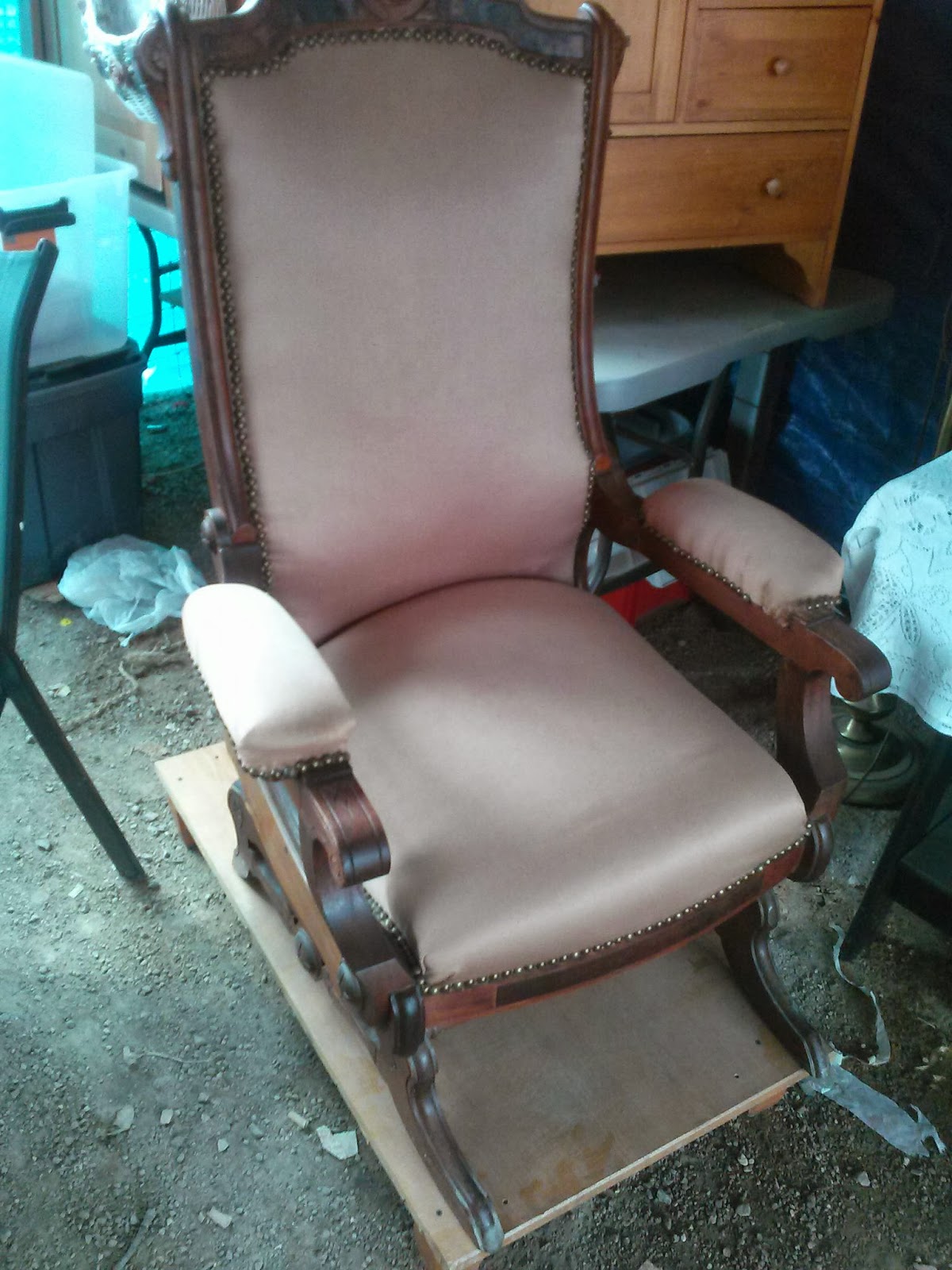
A teak Victorian rocker... priced at $175.00, but we could talk her down a little. 

And just for fun...

The soundtrack to Valley Of The Dolls. A hipster must have... for a dollar...

Thursday, September 26, 2013

Consolea

Once upon a time, almost every cactus you see was called a Cereus.  This is generally how plant classification works... It starts very simply.  Water holding desert plants with viscious spines are obviously different from all the other plants, so lets call them the same thing. 

Then, well this spiny plant was obviously a different kind of spiny plant than that one, so you begin sorting them out, and you eventually separate things into groups of genus's of their own, and so on and so forth.  Some of these splits are fairly straightforward... The Giant Saguaro started Cereus giganteus, went to Pilocereus giganteus, and eventually settled into Carnegiea gigantea.  And it's fairly obvious that, say, a Mammillaria is not a Carnegiea.  And some of those Mammillaria are obviously and noticeably different from the others, let's call them Escobaria... etc.

Then science makes an advance, people look at things under their magnifying glasses... then their microscopes, then electron microscopes, then genetic testing comes into play.  All this in the interest of accuracy and making plants easier to ID and actually making it nearly impossible for the average Joe, who let's face it can't reasonably be expected to have an electron microscope laying around gathering dust in the garage, to ID that really cool plant he just bought of the clearance table at Wal-Mart with 100% certainty on his own, so he's relying on the tag stuck to the side of the pot which may or may not be right, because the nursery where the plant came from doesn't have an electron microscope either. 

Let's face it folks... you need a masters degree to understand the language in some of those scientific papers, much less the actual science involved. 

Well, the work separating those cereus types is ongoing, and as more advances happen, will continue.  And some of those diligent little scientists have turned their attention to Opuntia. 

At first, Opuntia seems a fairly straight-forward genus.  Most of them grow in pads or sections.  Most have spines, and at the base of the spine, in the ariole, there are little mini-spines called glochids which are much more troublesome than the spines ever hoped to be.  These are collectively called Prickly Pears.  Some of them are called Cholla.  Most of us can wrap our brains around this pretty easily.

Turns out, not quite as straightforward as we thought.  While, most Opuntia are still Opuntia... it is being split into several genera.  Currently, according to Wikipedia, fifteen genera.  I fully expect more to come... Under the subfamily Opuntioideae, we have:

1.  Austrocylindropuntia (cholla-ish)
2.  Cumulopuntia (cholla-ish.  Actually, even more "ish")
3.  Cylindropuntieae (cholla)
4.  Grusonia (cholla)
5.  Pereskiopsis (most of us wouldn't recognize Pereskiopsis as a prickly pear, or even a cactus)
6.  Quiabentia (another that doesn't even look like a cactus.)
7.  Brasiliopuntia (prickly pear.  A really tall one.  You've probably seen little ones as house plants)
8.  Consolea (prickly pear.)
9.  Milqueliopuntia (stubby cholla)
10.Opuntia (prickly pear)
11.Tacinga (prickly pear)
12. Tunilla (pickly pear)
13. Pterocactus (cholla-ish)
14. Maihueniopsis (prickly pear-ish)
15.Tephrocactus (cholla-ish)

Some sources also list a few others... notable Micropuntia (little chollas) but until everybody straightens themselves out, we're gonna go with what we got. 

Now, all this is complicated by the fact that prickly pears are, as a general rule, highly adaptable and highly variable.  Hence, the plant in the natural habitat, and the plant you have at home may be the same species, but look totally different,  The amount of light, water etc, will all make the plant change it's size, spines, even color.  So it's confusing enough. 

And now, we get to the plant that started all this... It started when a friend of mine bought a prickly pear on the clearance table at Wal-Mart. 

Actually, it was a score.  A really nice one gallon pot full of bright green pads, for five bucks.  I was a little jealous. 

"Where are you gonna put it?" I asked, looking around to the living room windows. 

"In the yard," he answered. 

"You mean on the patio?"

"No.  Out by the garage with that other prickly pear."

"It'll  die!  It won't survive the winter."

"Hell they grow wild in the pasture..."

"Not this kind.  Most prickly pears won't..."

Blank stare.

"It's a damn prickly pear..."

"There are like, a hundred different kinds of prickly pears... and most get killed by a hard frost..."

"Whatever..."  followed by eye-roll. 

So, you're starting to get the idea of why it's kind of important to find out what kind of prickly pear you got...
Anyway, I looked on the side of the pot, and saw the name Opuntia falcate.  I whipped out the smart phone, typed it in and... Nothing. 
 
So, I took a couple of small juvenile pads, and promised to get back... In case you haven't noticed, cuttings off plants I have to ID is turning into a very convenient way to increase my collection with no investment of money.  Just saying.

They're rooting now... actually, they're very well rooted now and starting to show the first signs of growing.
 
 
And here's what I found out... Yes it's a prickly pear.  Obviously.  And no, it's not an Opuntia.   It's a Consolea falcata.  Or possibly a Consolea macracantha... no way of telling till it gets a few blooms on it, which is probably a while off.  Native to the Caribbean islands, it is listed as critically endangered in Haiti, and may not be there anymore.  (there were 10 mature plants on a beach in Haiti before the 2008 hurricane, which may or may not have wiped them out.  So, if anybody is going to Haiti, you're probably going to hit a beach at some point, so it might as well be this beach, so look around, see if there's any cactus and let us know.) 
 
It seems to produce rather smaller 'juvenile' pads, and look pretty cute, before it puts up longer, round straight growth which grows pads on the end.  The juvenile pads then, over a period of time, waste away.  All of this is pretty far off, but I am sure that it won't survive a winter here, which was really the point, and I won the bet, (FREE PIZZA, WOOOO HOOOO) and got a new plant in the process so I'm doing good...  
 
Since it's native to Haiti, I'm going to assume that, even though it grows in sandy soil near the beach, it still needs a bit more water than our native prickly pears, and I'll water it whenever it gets dry. 
 
Next, and totally unrelated, I was over at Julies blog, A Succulent Life, where she was thrilled to find a grasshopper.  While I certainly can't imagine being happy about that, I did promise to take pictures of one of the more handsome species that frequent the yard here if I got a chance.  Well, when I went out to take a pic of the little prickly pear here, lo and behold, look who was sitting on my Rhipsalis cuttings.  Got a pic before I made him leave... Enjoy Julie...
 
Update... this grasshopper has been ID'd as Schistocerca obscura, commonly known as the Obscure Bird Grasshopper.  I don't know why its called obscure, but there we are...
 

Wednesday, September 25, 2013

blogger public service announcement...

hey folks... I'm sure some of you know about this already... but if you go to your stats page and see multiple views from places with weird names... like  'vampirestat,' 'adsensewatchdog' 'zombiestat' 'uglystat' etc... there's too many to actually list here, and there's new ones everyday.  Don't click on the links. 

At best, you'll be directed to a page of ads.  At worst, you'll be infected with malware or a rather nasty virus. 

The new blog, Little Goth Bob's World yesterday got 100+ views from these... in the future I shall call them BLOTIA which stands for Bloodsucking Leaches On The Internets Ass, but I fortunately already knew about them so I didn't click. 

They're called Referer Spam, and Google and/or Blogger is unable or unwilling to block them for some reason, and even if they did the name would change and they'd be back in the space of 15 minutes.  Even though it messes with your counts on the Stat Page, they are able to exclude the numbers when it comes to your AdSense page and Google ratings, so it doesn't affect that if your worried about it. 

If you really need to check or track your stats, there are a few widgets out there to do it.  They have no problem blocking these sites... hmmmm.  

Now, while I kinda understand what they are... here's a link that explains it a lot better than I can...

Spam Spoiler, a blogger on BlogSpot who knows his stuff.

The basic advice is this.  Don't click on them.  Ther're not actually reading your page, they're not actually going to your blog, they're not actually sending anyone to your blog.  As to the stats... it's an annoyance, but it's not harming you, and since it doesn't touch your adsense or google ratings, it's not costing you anything.  (which is probably why google isn't pursuing it) and unless you click the link, it doesn't really have anyway to get you. 

It's annoying, because I like to see if anyone is viewing my posts.  These numbers are confusing and they generally make the stat page totally useless. 

As a general rule... don't click on any of the links on the stat page.  If you really want to get on my blog, or anyone elses, do it from your link list, your followers list, or favorites list. 

announcement over.
 

Cactus cutting

 And here's the cutting of the Bad Hair Day cactus. (Epiphyllum phyllanthis v. guatamalense f. monstrose) Actually, I was given two cuttings, which were really huge for cuttings and I've turned into four.  I've placed them in their re-cycled pot, with rooting hormone, which probably isn't absolutely necessary, but I have it here and it may help the process along a little quicker, so why not? 
 
I've watered it well, and now I'll be placing it in it's humidity chamber (which is a fancy name for a zip-lock bag that I bought at the everything for a dollar store.)
 
 
A few additional notes on this plant... the leaves (stems actually) are distinctly stiff and leathery, much more so than any other epiphyllum I've ever dealt with.  Probably part of it's monstrose heritage.  I'm sure it's going to root fairly well, as it seems inclined to put out aerial roots, which can very easily turn into real roots, so I'm not foreseeing any real difficulty. 
 
I also can't find any evidence that this species has been used for hybridization purposes.  (If anybody out there knows of it, please let me know, I'd love to hear about it.) Which I kind of get but kind of don't.  Epiphyllum species (generally called Orchid Cactus because of their showy blooms and orchid-ish culture) are probably some of the most hybridized cactus out there.  I kind of get it, since this species doesn't have a particularly showy flower.  Many 'monstrose' varieties of cactus, no matter what genus, have flowers that are stunted, deformed or plain flat-out non existent.  The non-monstrose variety of this species has a nice respectable 3 to 4 inch wide white, nocturnal flower, borne on a flower tube that can be about 8 inches long , but this monstrose variety bears a 1 inch flower on a tube about 3 or 4 inches long, that may or may not ever fully open.  Since Epi hybridization has always focused on blooms, I can understand why it's never been utilized for hybridization. 
 
This species, and the rik rak cactus (Epiphyllum anguliger, yesterdays post) are the only plants in the genus that are really valued for their foliage.  The other species in the genus are, like orchids, grown for blooms.  Epi's aren't unattractive plants, actually they'd probably be considered a little more attractive than most orchids, some of which can be considered downright ignorable when they're not blooming, but it's the big showy blossoms that are valued. 
 
Still, since you're going to be looking at the leaves for the vast majority of the time, shouldn't there be some consideration for the attractiveness of the things? 
 
It also occurs to me that some of you may be getting a little tired of seeing that bright yellow work table as a base for my plants.  Well... that table seems to be where everything gets done.  Sorry. 

Tuesday, September 24, 2013

Rik Rak cactus

 I have decided to do plant profiles.  I like them.  I like reading other peoples plant profiles.  I also like having info readily available, and I like doing the research, although I don't like having to re-do the research when I forget something and don't have it saved anywhere.  Besides, it seems to come naturally to me, because I grew up with my mother... She liked plants, but she thought that plant tags were ugly and ruined the looks of the plant, so she would throw them away.  Then there was always some confusion a few months later about what the poor plant was... so at a young age, I learned to write stuff down in a little notebook. 
 
     However, as I got older, I've developed a total inability to keep track of notebooks, random pieces of paper, etc.  A PC or smart phone however, seems a bit harder to misplace.  Usually.  Yesterdays post on the Bad Hair Day cactus was the beginning of this I suppose. 
 
     Basically, I'm  writing these to keep as a reference for myself, but I do hope that you, Dear Reader, might find something useful in here too. 
 
     All that said... todays plant is (drum roll please...) Rik Rak Cactus.  Some of my research also says it's called Moon cactus or Queen of the Night.  I've heard a couple of dozen plants go by those names... but not this one.  Oh well... the actually botanical latin name is Epiphyllum anguliger.  They are native to the rain forests of Mexico, and are epiphytes.  Epiphytes are the princesses of the plant world... growing in an elevated status in the trees, never deigning to touch the ground like those (sniff sniff) COMMON plants.   
 
 
Despite this princess attitude... the Rik Rak is a dead common houseplant, and not particularly demanding.  Like most, if not all, of the Epiphyllums, they are adapted to living in the nooks and crannies of trees in the rain forest.  These nooks collects dead leaves, moss, bird droppings and such, giving seeds or broken leaves something to root in.  While this growing medium can be very rich, there usually isn't much of it, so the plants depend on the daily rain and extremely high humidity to provide moisture.  As the plant grows, it continues to gather debris in its roots.  
 
I acquired this specimen last June at Lowe's hardware store, on the clearance table for $4.50, and it has about doubled in size since then... or it would have if I'd stop taking cuttings off it... more about that later.
 
A close examination of the plant,  which I like to call 'forensic gardening,' exposes the plant for what it is.  Not so much a single plant as a collection of about 20 cuttings.  
 
 
Now, there's a definite reason for this. 
 
In a nutshell, to turn a single cutting into a plant that's big enough for the nursery to sell would take a year or more.  That's a huge investment of time and resources, space, fertilizers, care, wages, electricity for artificial lights and heating... etc, etc, etc.  This would make the plants expensive to produce, and expensive to sell.  By putting several cuttings in a container, when each cutting produces 2 to 3 new leaves, the pot is full and fluffy, and you can sell it within 1 to 3 months(depending on the species and type of plant)  It's much more cost effective. 
 
The problem for the home gardener is this... sure it's a great looking pot now, but each and everyone of those cuttings has the potential to become a full grown plant that's about 3 feet tall and 3 feet wide.  And it's not going to do that while crammed in there with its 20 cousins, there's just not enough room, nutrition or, well, anything...
 
Fortunately, while these are quick growing for a cactus, they're not that quick growing.  Sometime next spring I'll split this into separate pots.  Either four hanging pots or small individual 4 inch pots which I'll sell at the flea. 
 
Until then... the care of this plant is pretty straight forward.  It has to have bright light.  By that I mean extremely bright shade to more light that you'd think it could handle.  One of the reasons that the plant adapted to the tree tops is that the floor of the rainforest doesn't get that much light, and high in the trees they're often exposed to full sun... however, I've found that hanging on the edge of the front porch suits it just fine.  It gets the slanting light in the morning and afternoon directly, while getting shade from the hot noon day sun. 
 
While some growers try to duplicate their native conditions with quick draining soils, and put them in greenhouses with 80% humidity and mist them daily, most of us just don't have that option. 
 
Next spring, when I divide these cuttings, they will need rich well draining soil.  Here in Texas, we don't have the humidity it would like here, so I try to use soil that holds on to some more moisture for it.  A plastic hanging basket works fine.  While the plants can get big, their root systems aren't extensive.  The roots are however tough and strong, after all the plant is adapted to hanging on to a tree for dear life.  Remember when I said 'princess?'  Think 'really really determined princess.'
 
In the past, I've found that a rich potting soil like Miracle Grow or Scotts puts out, mixed with common wood chip mulch will drain quick enough but still retain enough moisture to make the plant happy.  Some growers recommend and orchid mix, which is too expensive for my taste... but if you're willing, go for it.  If you want to make your own... compost, peat moss and un dyed wood chips in equal amounts sounds about right.  You can add perlite or vermiculite if you wish, but the wood chips loosen it up enough to allow drainage.
 
Generally any good plant food works.  I suppose, if I was going for absolute show stopping plants I would invest in orchid fertilizers to go with the orchid mix, but there are too many perfectly acceptable and affordable fertilizers out there.  Since I'm in Texas where in the heat of summer it reaches 100+ degrees here, and doesn't rain for a month at a time, I have to water once a day minimum, sometimes every morning and every evening, (hence that up there about soil that retains some water) fertilizer residues don't build up in the soil, and I feed these and the other jungle cacti every Saturday.  About half recommended strength on the label.  They do just fine.
 
It's almost impossible to over-water these cactus.  As long as the potting mix drains well, they can take about all the water you can give them... just don't let them sit in water and you'll be fine.
 
The plants zig zag leaves (actually stems, but everyone calls them leaves) give it the common name of rik rak cactus.  The leaves do have, in the valley of the zag, some small spines.  They're not serious spines, enough to remind you that you're dealing with a cactus. 
 
They're not that troublesome, certainly not as annoying as the small hair like glochids you have to deal with on a prickly pear.  If they don't brush off, try pressing a piece of duct tape on the skin and pulling it off. 
 
The stems are handsome enough without flowers, and since this pot is a collection of cuttings less than a year old, expecting blooms would be a bit much, although this is about the time of year you would expect it to start setting buds, when the summer heat has started to give way to the autumn rains.  The blooms are white, with the outer petals or sepals a red or pink.  The blooms are nocturnal, opening well after sunset, so you may have to stay up late to see them.
 
The plant is easy to propagate.  Take a stem section and put it in a pot of soil.  You can use rooting hormone if you want, but it usually isn't necessary.  The plant will be rooted and putting out new stems in about a month, much like the cuttings in the pic below.  If the stem is a large one, cut it into sections that are 3 to 6 inches long, and it becomes several cuttings, like the cuttings that were filling my pot above, and the cuttings in the little coffee cups below.


The plants are so easy from cuttings that they're usually not grown from seed, but if your plant produces flowers and fruit, it's not that difficult and you may want to try.  Let the fruit get extremely ripe on the plant.  Split the fruit open, spread the seeds over the top of a pot filled with damp, sanitized peat moss and cover with plastic wrap.  Or put the pot in a big ziplock bag.  You should have seedlings within 2 weeks if not sooner.  You can dry seeds to save for later if you wish.  These plants are rain forest dwellers... so while some seeds like or require a drying out period to do well, drying out isn't really part of their life cycle.   

Monday, September 23, 2013

Bad Hair Day Cactus

 Or to be more specific... Epiphyllum phyllanthus v. guatamalense f. monstose.  Yeah... now try to imagine someone with a very thick southern accent trying to say that.  And, since I couldn't find a common name for it... I have dubbed it the Bad Hair Day cactus, because it was either that or Stripper Hair cactus, and Bad Hair Day cactus just sounded better.  And to make it even more interesting... there's evidently some confusion about Epiphyllum phyllanthus v. guatamalense f. monstose.
 
 
You see, evidently there's an Epiphyllum guatamalense already.  That may or may not have anything to do with this plant.  There's also an Epiphyllum phyllanthis v. guatamalense that has straight non-monstrose leaves.  Now the whole purpose of latin botanical names is to avoid confusion.  But there's something about a taxonomist that evidently doesn't want anybody to actually know the name of anything.  Maybe it's because everything has pretty much been named already, so they have to justify their existence by renaming things.  I'm pretty sure that's what happened to Aloe vera.  The entire planet knew Aloe vera.  Worldwide... then TAH DAH... it's suddenly Aloe barbarensis.  I know... there's been entire papers written to justify the change, and the reasons are valid enough.  I'm not saying that the change isn't valid, just that it's annoying, and I'm willing to bet that a large part of it was some botany geek sitting around with a bug up his nose and suddenly deciding to make trouble.  Or that's my opinion.  Not that anybody gives a dang about my opinion. 
 
And now that I got THAT off my chest, about this plant.  If you read yesterdays post, you know that there's a dealer named Barbara who makes mummified bugs into small sculptures.  That are way cool.  She also brought some plants in to sell.  This was one of them.  She showed it to me, and she had me stumped.  I had never seen that plant before in my life... I knew it was a jungle cacti, but that was it.  She didn't know what it was either.  She'd gotten a 'start' from someone who didn't know what it was, and for all I know that person had gotten a 'start' from someone who didn't know what it was.  Hell, it's distinctly possible that 'starts' from this plant had been handed down for the last century by people who had no idea what they were growing.  Which would really annoy the aforementioned taxonomist.  Well they can just put that in their pipe and smoke it. 
 
She snipped off 2 cuttings for me, and sent me on my way, with a promise that I would find out what it was.  I knew it was a jungle cactus.  I knew she told me that it bloomed... and this plant had buds...

 
And I knew that it also produced little pink fruits that were decorative in their own way. 


And that's all I knew.  I went to Cacti Guide (that's a link, or it's on the bottom right of your browser) and didn't have any luck.  At a loss, I sent some pics to the wonderful guys at the Cactus Jungle blog.  I haven't heard back from them... but hopefully when I do, it'll confirm the ID I finally came up with. 
Or not.  I might just give up and start slapping random strangers on the street. 
 
Finally, I went back to the Cacti Guide and clicked on individual plants... went through all the rhipsallis, which I didn't really expect to find it there, the fruit was wrong, but I was more or less hypnotized by the process by then, before I finally went to Epiphyllums, and after clicking on the phyllanthis there were three pics, and one of them looked like the plant in question.  The other two, however, had long flat leaves.  It did not however mention the v. guatamalense f. monstrose part of the name, so that started another hour of Google searches... and that's how I finally came up with it. I also ended up with a slight headache. 
 
I also found out that this plant is considered 'fairly rare' although there's some mention of people picking up pots of it at Home Depot, usually with an Exotic Angel tag that reads 'Rhipsallis species' and that there are some vendors out there who sell unrooted cuttings of this plant in the price range of $7 to $9. 
 
After all of that, I finally determined that the cuttings should be placed well draining moist soil and they would root readily.  Which, lets face it, was what I was gonna do anyway, so it all left me kind of wondering why I had just wasted 2+ hours of my life. 
 
Oh well. 
 
Nice to get back to plant posts...
 

Sunday, September 22, 2013

BUGS. way cool BUGS

One of the other dealers at the market makes these... they're real bugs, mounted in realistic settings.  After the LG Bob site is going good... this week I promise... I'm looking at finding other things to list.  Seriously considering these... they're really fascinating

Saturday, September 21, 2013

Work Work Work...

Just moving and moving all that stuff to the new booth.  Finally got it there, and began the slow process of arranging it.  Which takes longer than moving it, especially since there's customers trying to shop at the same time. 

Did sell a couple of Bob's today, despite everything being an unholy mess... or maybe because of it,  and got a bit of the Halloween decor up...
Altogether a pretty productive day...

Friday, September 20, 2013

not a good day...

So, I knew it was antique alley weekend.  I wasn't expecting a huge crowd at the flea, so I decided that it would be a fine day to take in all the collected bits and pieces that I was going to use to decorate for Halloween.  And last night it rained.  Which i should have expected, after all, they throw antique alley in the 2nd half of September because that's when the summer heat breaks.  That's also when the autumn rain starts, and it's 100%guaranteed to rain on antique alley, at least on one of the 4 days.

So, it had rained overnight.  I wasn't however expecting 5 inches of water in my booth.

It's not disastrous as it sounds.  I've worked enough outside venues to know that you raise everything off the ground.  I had some warehouse skids under my shelves, and I've got cinder blocks under other stuff, and 2 x 4's under others, and everything was pretty much safe,  but it was an unholy mess.

There was one booth, towards the front, middle aisle, much better location, and out was empty and not flooded.  I laid claim and defied anyone to argue with me, and began moving stuff.

About one o'clock, I was pretty much moved, not quite totally, but it started raining again, I was converted in mud up to my knees, my shoes were soaked through, and I finally gave in too the misery and got home.

Now, add to the flooding problem.  The county had been alerted to this, and swears they're gonna fix the drainage issue, does drain, just S L O W.  They're gonna dig the new ditches,  etc, etc, yada yada... but, it's government so it will happen when it happens.

They say no rain tomorrow.  We'll see.

Thursday, September 19, 2013

Announcing...

The LG Bob blog is up.  One entire post.  Here's the link

Please click on it.  Repeatedly.   It will help it start showing up in search engines.

Right now, if I type in the phrase Little Goth Bob, the engines take it to one of my posts... so that's going be a link too.   Got some editing to do...